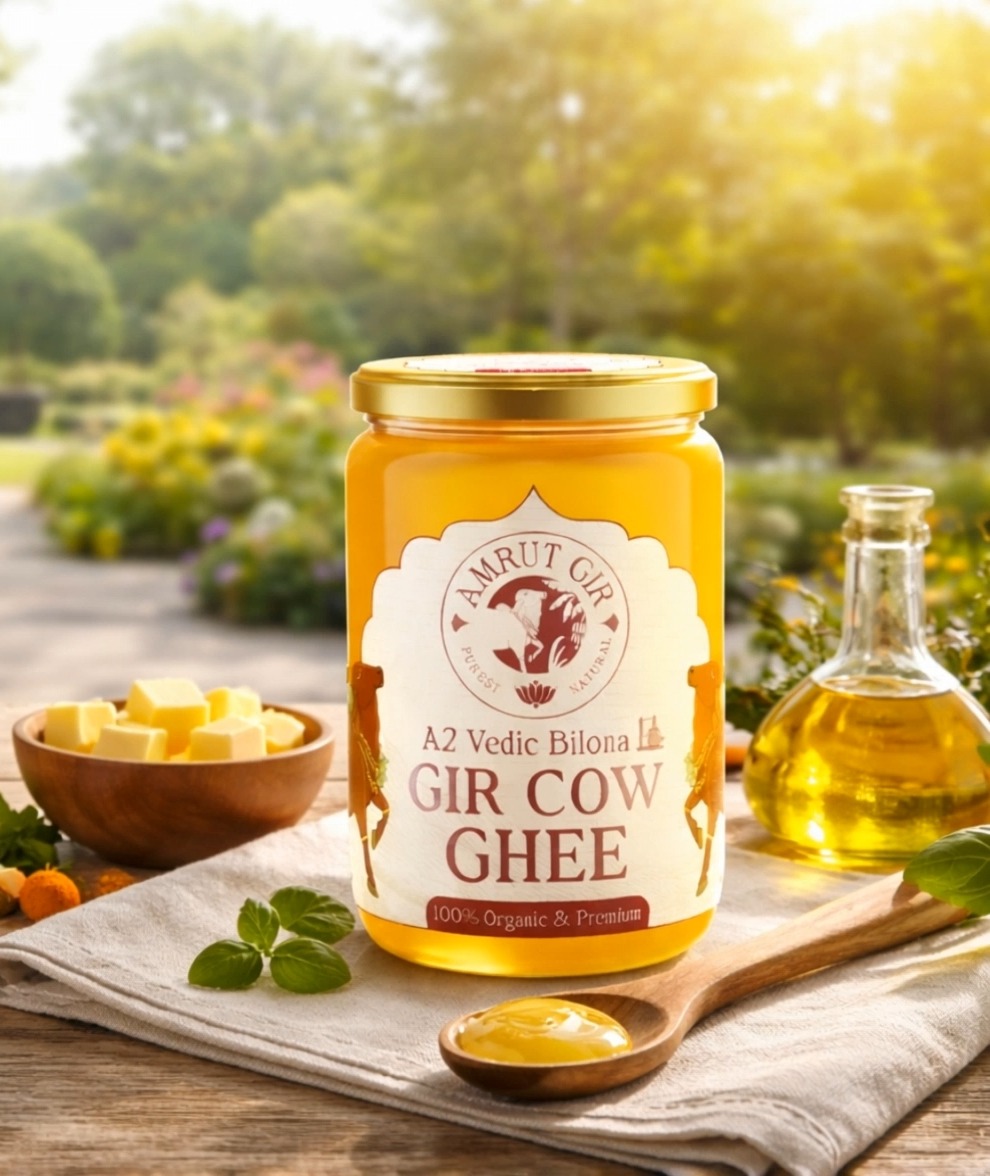
What Is Bilona Ghee? The 7-Step Process Behind Every Jar
The slow, hand-churned way our grandmothers made ghee — and why it still tastes like nothing from a factory.
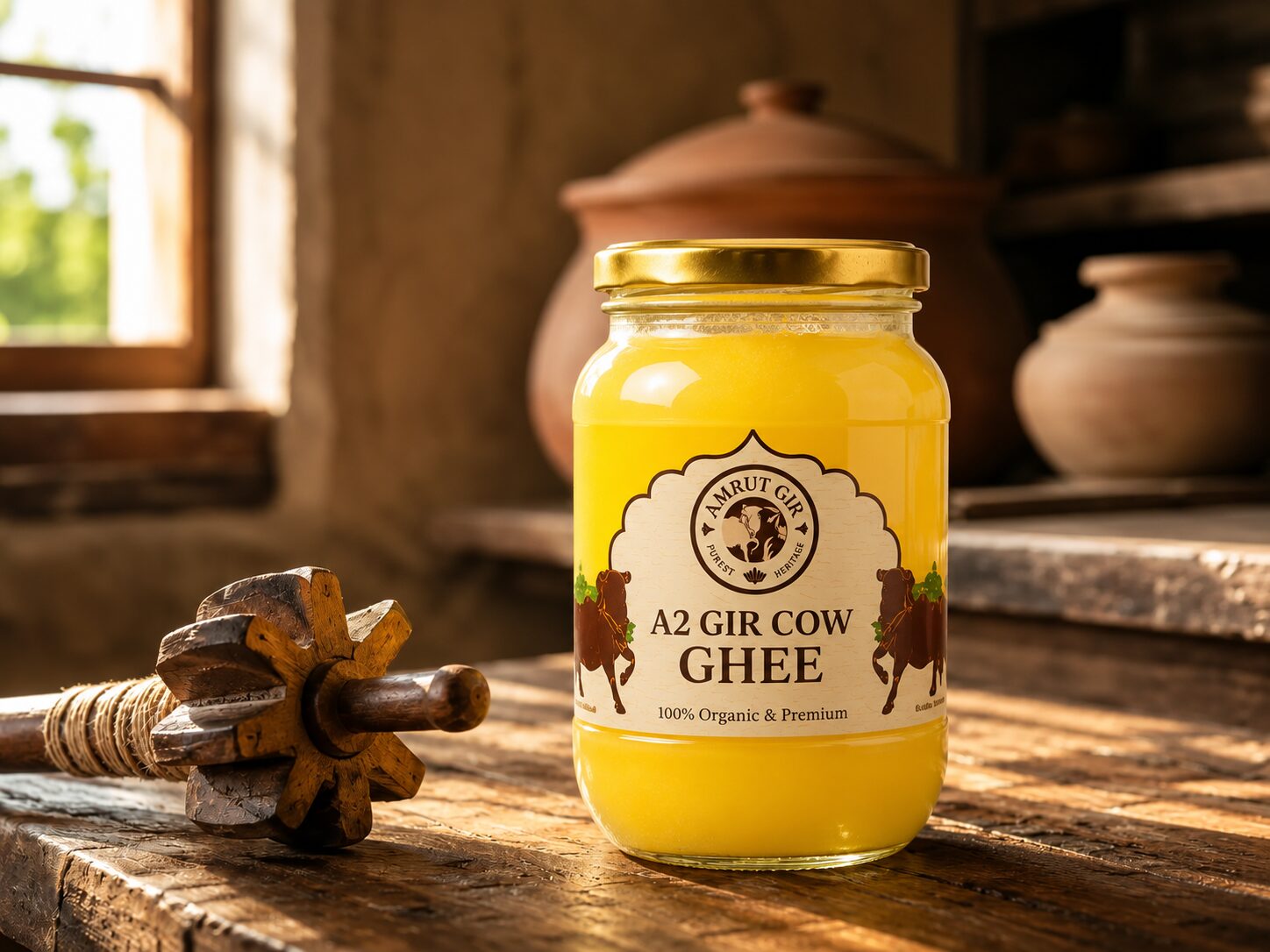
There's one smell from my grandmother's kitchen I have never been able to forget. Ghee, slowly turning golden on a low flame, the whole house wrapping itself in that warm, nutty aroma by the time the sun was fully up. She never bought it in a packet. She made it. Slowly. The same way her mother did.
That slow way has a name. It's called the Bilona method, and the ghee it makes is what people now call bilona ghee.
If you've been seeing the term everywhere lately and wondering whether it's just another label on a jar, here's the honest answer — and the full 7-step process behind it.
So, What Is Bilona Ghee, Really?
Bilona ghee is ghee made the traditional Indian way: from cultured curd and hand-churned butter, not from cream. That one difference changes everything.
Most commercial ghee takes a shortcut. Milk goes in, cream is skimmed off, and that cream is boiled straight into ghee — fast, cheap, easy to make in huge factory batches. The Bilona method refuses the shortcut. The milk is first set into curd, the curd is churned by hand to release butter, and only that butter becomes ghee.
"Low yield, more care, smaller batches. It's the slower road on purpose."
At AmrutGir, this is done with milk from grass-fed desi Gir cows — a breed that gives A2 milk, around 7 to 9 litres a day, far less than the high-yield crossbreeds.
Beyond the buzzwordWhy the Method Matters
People don't pay more for bilona ghee because of a name. They pay for what the method gives back:
- Taste & aromaCurd-churned butter carries a deep, sweet, nutty aroma cream-based ghee can't fake.
- Easier on the gutA2 Gir milk is gentler to digest, and fermentation adds to that.
- Real nutritionNaturally rich in vitamins A, D, E and K2, plus butyric acid and omega-3.
- No shortcutsNo preservatives, no colour, no artificial flavour. Just milk, time, heat.
Ayurveda has valued ghee made this exact way for centuries — for digestion, energy, and everyday wellbeing. The science is finally catching up to what those old kitchens already knew.
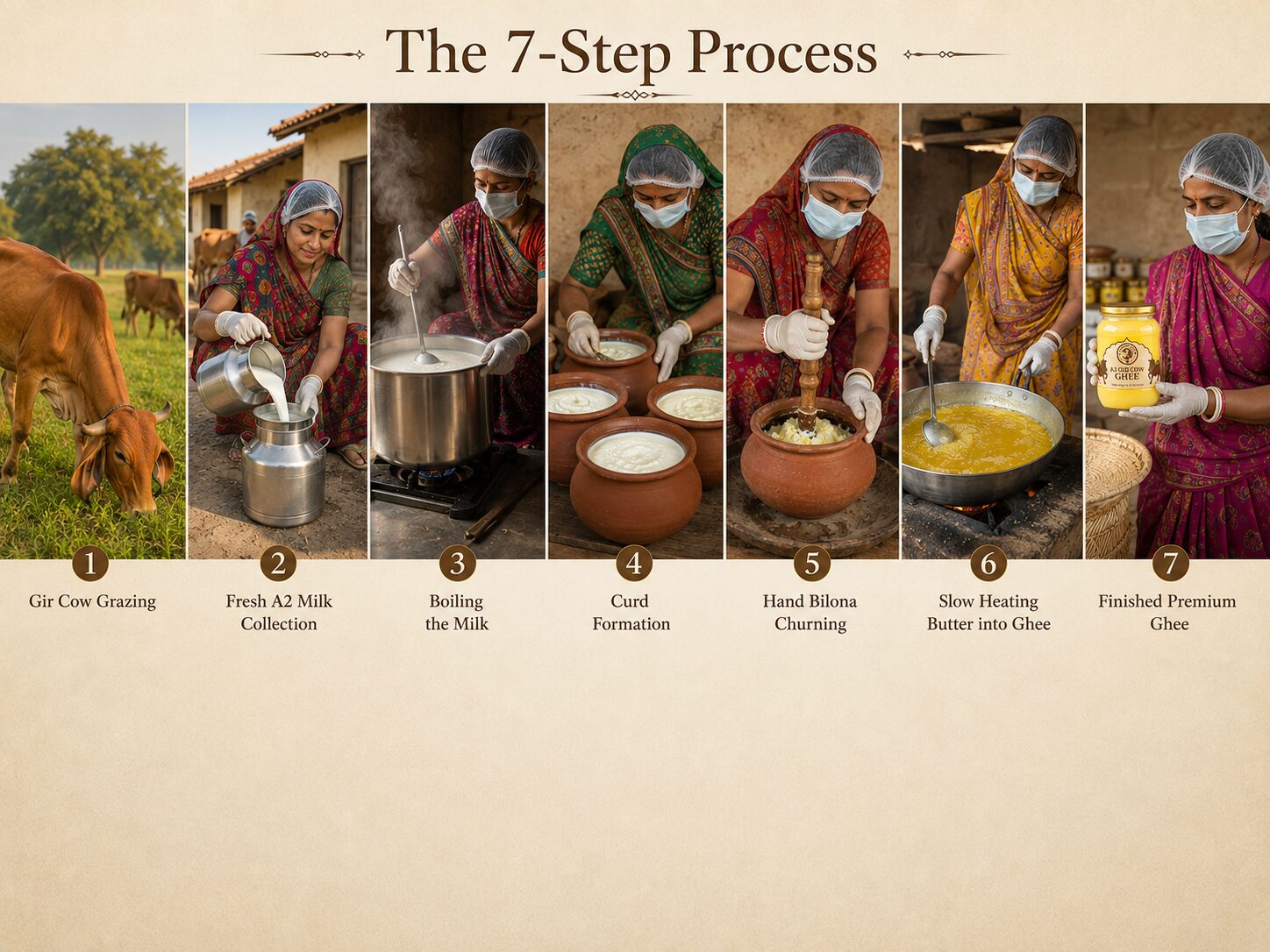
Milk to jarThe 7-Step Bilona Process
From milk to jar, bilona ghee moves through seven unhurried steps, spread across a few days. Here's what actually happens.
The Milk Comes First (and So Does the Calf)
Before sunrise, milk is collected from grass-fed Gir cows — and the calf is always fed first. What's left is single-origin A2 milk, traceable and never mixed.
Boiling the Fresh Milk
The fresh milk is gently boiled, cleaning it naturally and preparing it to be set — the way it was always done at home before refrigeration.
Culturing It Into Curd
Once cooled to the right warmth, a spoonful of curd starter (jaman) is stirred in. This small living step is what separates bilona ghee from factory ghee.
Setting Overnight
The cultured milk rests, undisturbed, usually overnight. By morning it's thick, tangy curd. Flavour and digestibility quietly build here. You can't rush it.
Hand-Churning With the Bilona
The heart of it. The curd is churned by hand with a wooden churner — the bilona — until creamy white butter, the makhan, rises to the top.
Collecting the White Butter
The fresh butter is lifted out and rinsed. Only this makhan goes forward — which is exactly why bilona ghee is made from curd and butter, not cream.
Slow-Cooking It Into Ghee
Finally the butter goes onto a low flame. It melts, foams, and turns clear gold, leaving soft brown solids and that unmistakable aroma. Strained warm, poured into the jar — finished.
That's the whole journey. Seven steps, several days, one small batch at a time.
How to Spot Real Bilona Ghee
Sadly, the word "bilona" gets printed on a lot of jars that never saw a churner. A few honest signals to look for:
- Aroma. Real bilona ghee smells rich and nutty, never flat or oily.
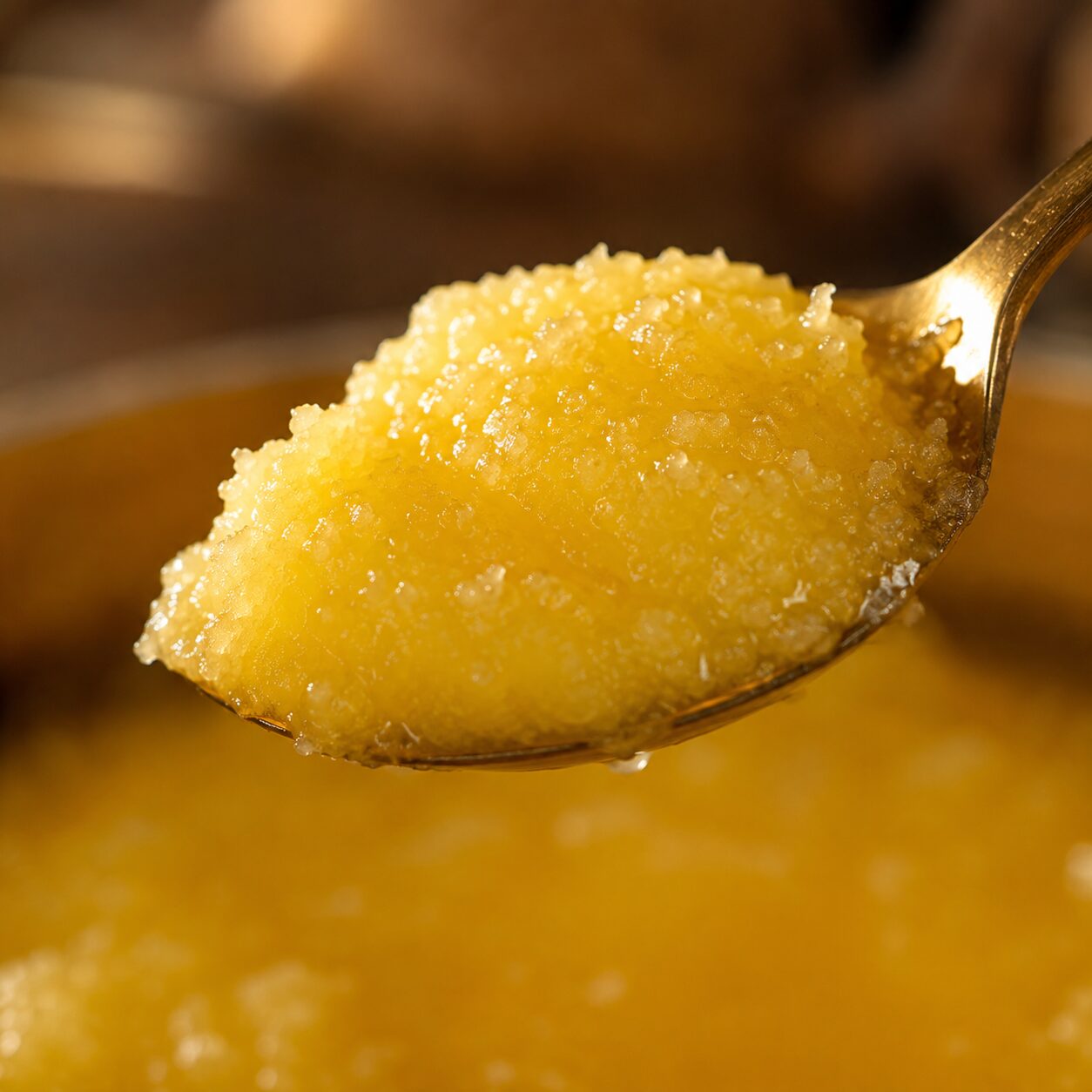
- Grainy texture. It often sets golden and slightly granular, not smooth and plastic-pale.
- Small batches. It can't be mass-produced overnight. Unlimited stock is a red flag.
- Transparency. A real maker shares the breed, the source, and lab testing.
How to Use and Store It
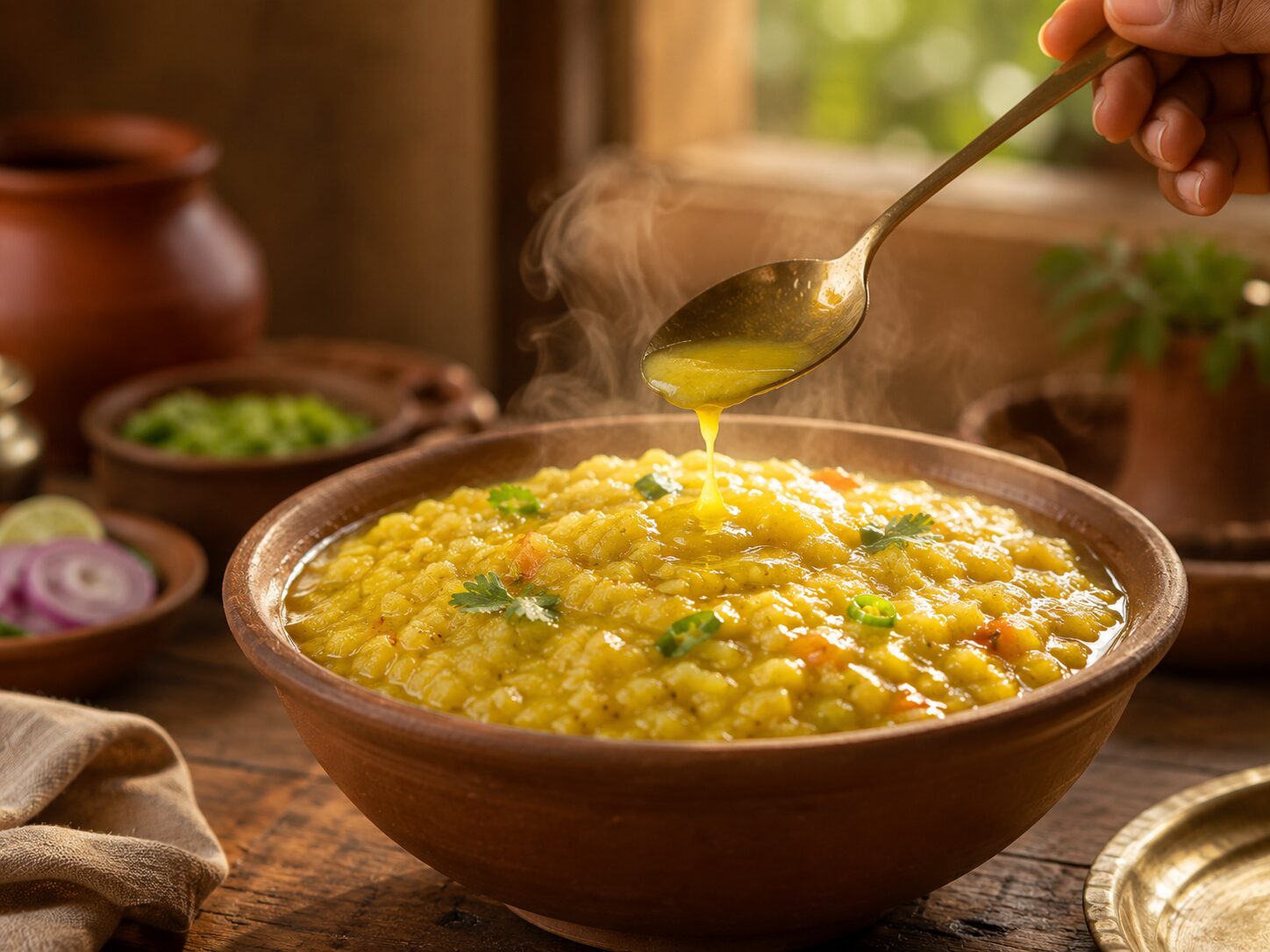
Use it the way your grandmother did — a spoon over hot dal or khichdi, in the first tadka of the day, on rotis, or simply on warm rice. A little goes a long way because the flavour is concentrated.
Storage is refreshingly simple: keep it in a cool, dry place. No refrigeration needed. Kept clean and dry, it stays good for around 9 to 12 months.
A Final Thought
Bilona ghee isn't a trend. It's the original way — the one we quietly traded for speed somewhere along the line. The seven steps above aren't complicated. They just ask for time, good milk, and someone who cares enough not to cut corners.
Frequently Asked Questions
What makes bilona ghee different from regular ghee?
Is A2 Gir cow ghee actually healthier?
Why does bilona ghee cost more?
Does it contain any preservatives?
How should I store it and how long does it last?
Taste the slow way.
AmrutGir releases fresh A2 Gir cow bilona ghee in limited quantities every week — hand-churned, lab-tested, made the way it always should have been.
Reserve Your Jar →