
How to Identify Pure Ghee at Home: 5 Simple Tests
No lab. No fancy kit. Just your hands, a pan, a fridge, and a few minutes. Here is how to check if your ghee is real or mixed.
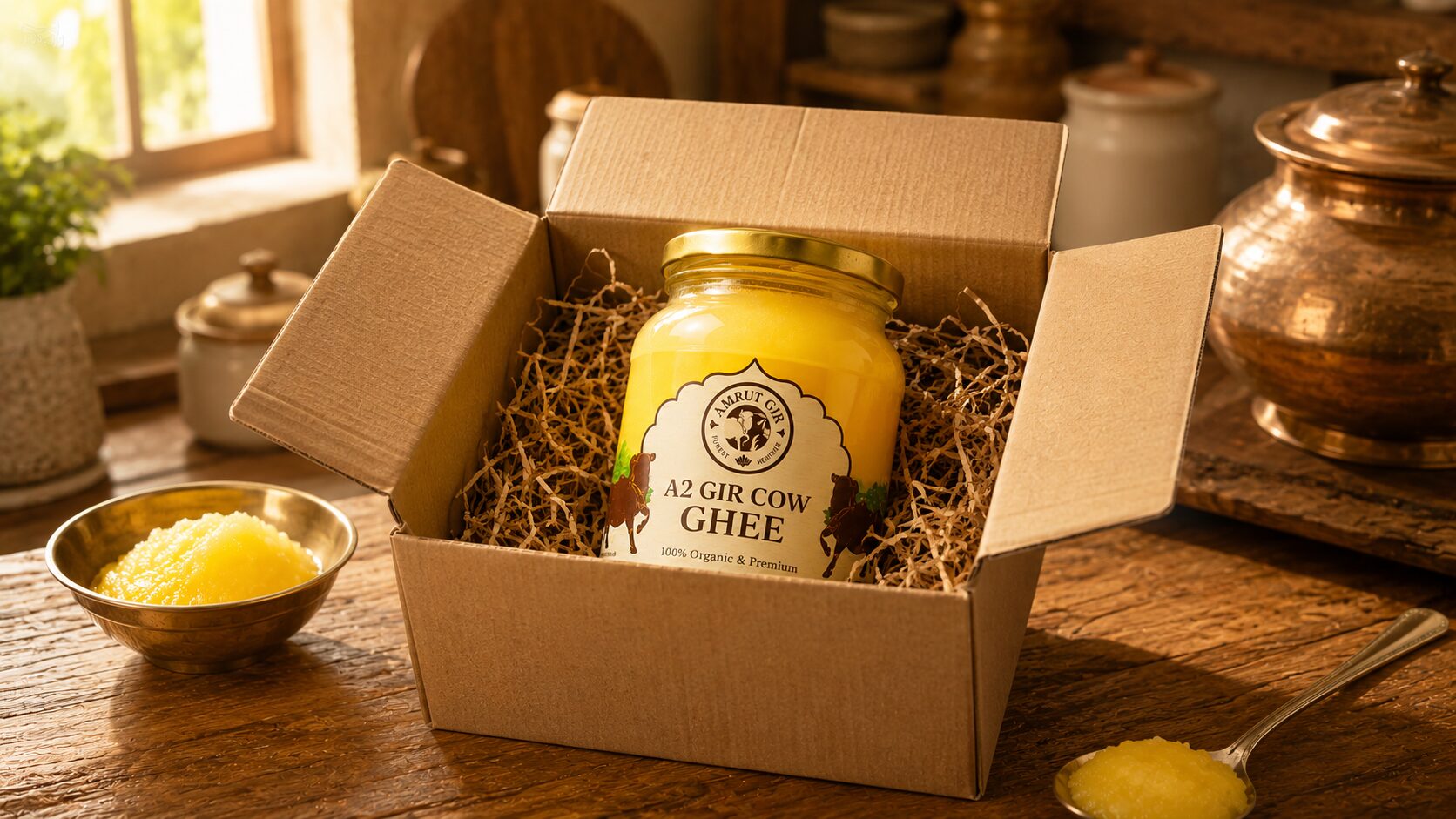
Last year, I bought a big tin of ghee that looked perfect. Golden, shiny, a well-known name on the front. But when I cooked with it, something felt off. No real smell. No real taste. It just sat there like oil. That tin taught me a lesson — never trust a label with your eyes closed. So I learned how to check ghee right at home, and I have done it ever since.
The good news? You do not need a lab or any fancy machine. You already have most of this in your kitchen. Here are five simple tests. Do any two of them, and in a few minutes you will know if your ghee is real.
In your own kitchenThe 5 Simple Tests
The Palm Test
Put a little ghee on your palm. Pure ghee starts to melt on its own, just from your body heat. If it sits there hard and does not move, be careful.
Easiest test. Takes ten seconds.The Heat Test
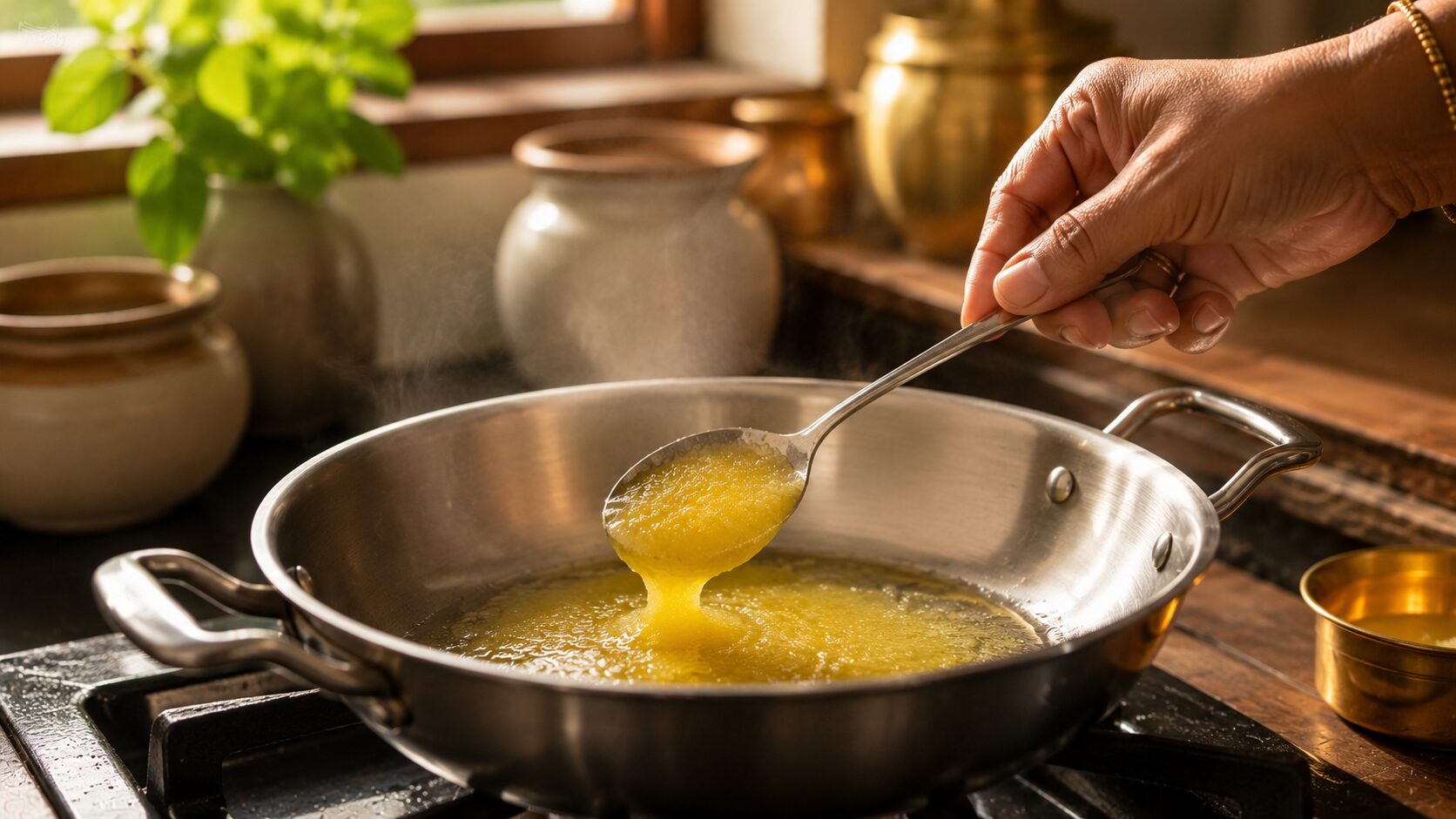
Heat a spoon of ghee in a pan. Pure ghee melts fast and turns a light golden-brown, with a rich, nutty smell. If it melts slowly and stays pale yellow, something is mixed in.
The Fridge Test
Melt the ghee fully, pour it into a clear glass, and keep it in the fridge for a few hours. Pure ghee sets evenly, in one colour. If you see two or three separate layers, other oils have been added.
The Iodine Test
Some sellers add starch, like flour or mashed potato, to make ghee heavier. Put a little melted ghee on a plate and add one or two drops of iodine (the kind in a first-aid box). If it turns blue or purple, there is starch in it. Pure ghee keeps its own colour.
The Smell and Taste Test
The oldest test, and still the best. Real ghee has a deep, milky, nutty smell and a clean taste that does not coat your throat. Once you know the real thing, a fake one is easy to catch.
"Your nose knows more than any label on the tin."
What Pure Ghee Should Always Have
These tests check what is inside the jar. But the real question is where the ghee came from. Good, pure ghee usually has these things:
- A clear source. The brand names the breed of cow, like Gir or Sahiwal, not just "desi cow".
- An honest method. Hand-churned the Bilona way, not rushed cream from a factory.
- Small batches. Real ghee cannot be made in endless amounts overnight.
- Proof, not promises. Lab reports and simple, honest details beat fancy packing.
This is the part I care about most now. At AmrutGir, the ghee is made only from pure A2 Gir cow milk, churned by hand the Bilona way, and lab-tested in small batches. You should not have to do five tests just to trust your ghee. But it is nice to know it would pass all of them.

A Quick Word Before You Worry
One honest thing. These home tests are simple checks, not 100% proof. One odd result does not always mean the ghee is fake. But if it fails two or three tests, trust that. And trust your nose most of all.
I will be honest with you. The first time I tried the fridge test on that old tin, it set in three ugly layers. I had been cooking with mostly oil for months. Since then, I check. It takes a few minutes, and it has saved me from a lot of bad jars.
Frequently Asked Questions
Can I really test ghee purity at home?
Which is the easiest ghee purity test?
Does pure ghee melt quickly?
Is grainy ghee a sign of purity?
Why is pure ghee more expensive?
Skip the guesswork.
AmrutGir is pure A2 Gir cow ghee, hand-churned the Bilona way and lab-tested in small batches. Made to pass every test, including yours.
Get Your Jar →